
How to Grow Aubretia
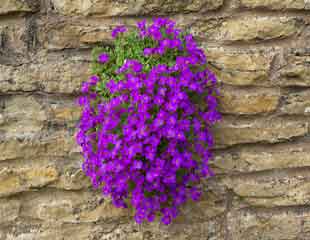
Aubrieta is a low-growing, evergreen perennial that produces masses of purple flowers in spring and is ideal for walls, rockeries and edging.
Growing Aubretia Key Points:
Height: most are low-growing mat-forming, around 10cm.
Light: Aubretia grows best in sun, but will tolerate semi-shade.
Soil: Most soils, except wet and specifically Aubretia, will tolerate dry soil.
Special Features: An evergreen perennial that is easy to grow and flowers reliably; attractive to bees.
Aubretia is fully hardy and flowers best in a sunny spot, but it will grow in semishade. Aubretia grows and flowers best in well-drained soil. It will tolerate dry growing conditions, making it suitable for being planted in walls and rockeries. It requires just a little maintenance and is trouble-free.
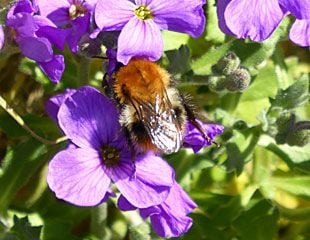
Aubretia flowers in shades of light blue, mauve and pink; some varieties have variegated foliage. Despite not being scented, Aubrieta still appeals to bees and is long-flowering.
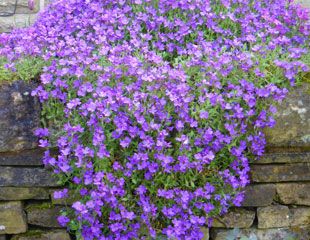
Although a simple and common garden plant, it is lovely to see a well-established Aubrieta trailing over a wall; a mass of blue, purple and pink. Aubretia looks pretty and makes a cheerful splash of colour.
It is easy to get cuttings from Aubretia. Often, they send out little plantlets around them, and you can pot these up to grow on for planting out later when they have mature roots. Also, Aubretia root easily trim off a cutting a few centimetres long in midsummer and root into well-drained compost. Let the plant grow on to a mature size in a suitable container, and then it is ready for planting out.
Aubretia can be raised from seed if you want to cultivate a particular colour or variety not commonly found in the garden centres, such as A.'Cascade red', which as the name suggests, is a bright red variety, but otherwise the easiest way is to take cuttings.
If Aubretia is not the plant for you, check out summer flowering plants, spring flowering plants, scented plants and the 10 best climbing plants for more ideas.
Are you finding this information helpful? Why not buy me a Coffee and read on ... and check out the video about how to cut back aubretia plus "before and after" images.
How to take cuttings from Aubretia
It is easy to get cuttings from Aubretia. Often, the mature plants send out little plantlets around them. You can pot these up to grow on for planting out later when they have mature roots. Also, Aubretia root easily. Trim off a cutting a few centimetres long in midsummer and root it into well-drained compost. Let the plant grow on to a mature size in a suitable container, and then it is ready for planting out.
Aubretia can be raised from seed if you want to cultivate a particular colour or variety not commonly found in the garden centres, such as A.'Cascade red', which as the name suggests, is a bright red variety, but otherwise the easiest way is to take cuttings. Crocus sells a neat blue variety 'Kitte Blue', and a white variety 'Axcent White'.
If Aubretia is not the plant for you check out summer flowering plants, spring flowering plants, scented plants and the 10 best climbing plants for more ideas.
An easy to grow perennial, a green wheelbarrow plant

How to cut back Aubretia + Video Advice Below
Aubretia has a tendency, as it matures, to spread, with a bald patch in the centre and flowers around the outside. To bring it back into shape, it needs to be cut back. There are two ways to prune Aubretia: a hard or light prune.
A hard prune: If the plant has become straggly, overgrown or bald in the centre, give it a hard prune, cutting right back as in the images and video below.
A light prune: With a younger Aubretia plant in better shape and more compact, it requires only a light prune up to 5cms ( 2-3 inches max. ). In both cases, prune in June when flowering has finished, or as soon as the Aubretia plant stops flowering in your area. It is best to cut back immediately after flowering. Cutting back later in the year may interfere with the plant's flowering next year. However, do not cut over winter.
Aubretia Before Cutting back
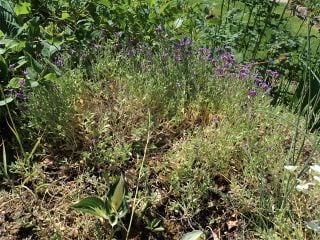
This Aubretia is overgrown, with baldness in the middle and needs to be hard pruned.
Aubretia After a hard prune
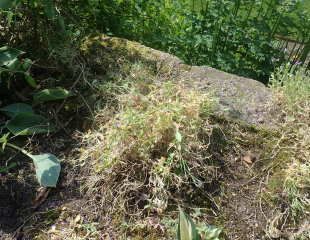
Although it looks unsightly, this Aubretia will grow back and into a better shape for next year
Small Aubretia plants
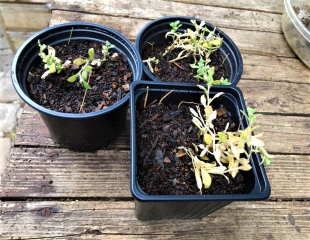
These small plants were alongside the main plant and by the end of the summer will be ready for planting out to flower next year.
This short video, less than 5 mins, shows how to prune and cut back Aubretia. It deals with weather to do a hard prune or just a light tough depending on the state of your Aubretia. It also explains the importance of watering after pruning.
As an aside, because Aubretia self seeds the video explains how to propagate from these seedlings.
This late brief video clip showing the same Aubretia in July about 6 weeks after pruning, illustrating its regrowth and neat shape.
Just when does Aubretia flower?
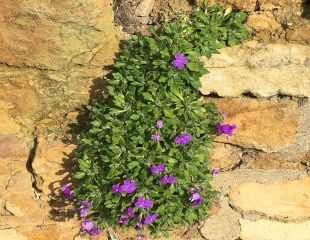
It becomes harder and harder to say when certain plants flower, given the variable nature of our seasons and weather. Gardening advice says Aubretia flowers anytime during March, April, and even May.
In the UK, we have an enormous variation in our seasonal weather around the country. This makes a great deal of difference. Plus, gardens have sheltered and exposed areas in gardens creating microclimates.
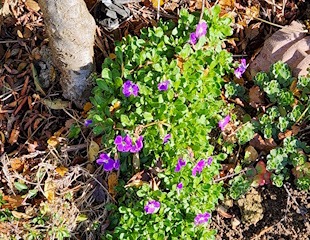
This aubretia in the image is flowering in early February. I can say this with confidence, as I took the picture on February 5th. It was flowering on a sheltered wall.
Then, just recently, I was further surprised. Walking around, I spotted this Aubretia. I took another image, and it's flowering in early November. It could be a second flush; it seems a bit late. So, I can now assert with good gardening authority that Aubretia flowers from February to November, depending on the season!